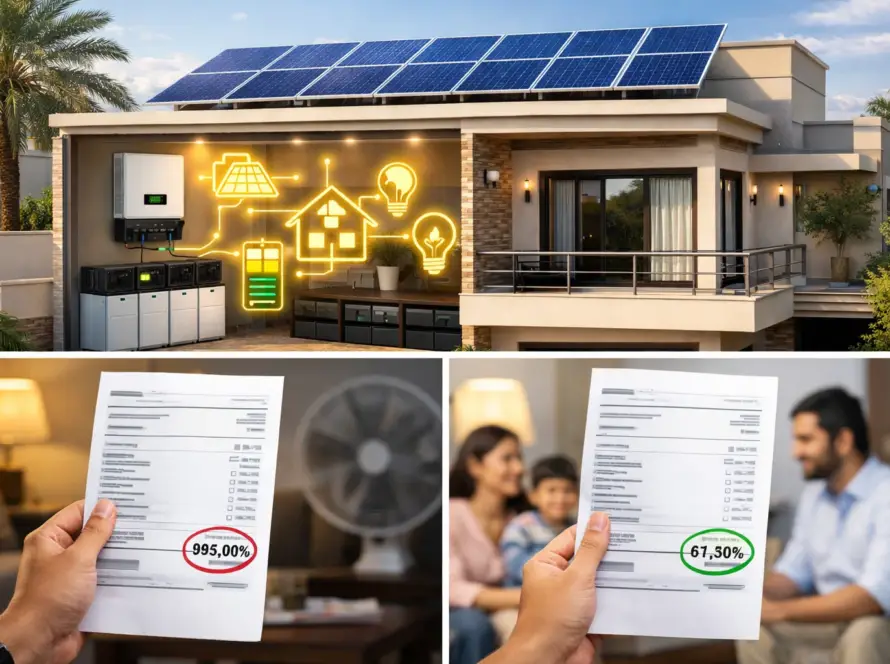
The solar payback period in Pakistan generally ranges from 3 to 5 years, depending on the solar system size, electricity consumption, and net metering benefits. With rising electricity tariffs and improved solar technology in 2026, homeowners and businesses can recover their solar investment quickly through significant monthly electricity savings and surplus energy credits.
Key Takeaways
- The solar payback period in Pakistan is typically 3–5 years for residential solar systems.
- Net metering significantly improves solar panel savings in Pakistan.
- A 5kW solar system can reduce electricity bills by 70–90%.
- Solar energy offers strong solar ROI in Pakistan due to rising grid electricity prices.
- System size, installation cost, and sunlight availability affect the payback period.
- Choosing the best solar company in Pakistan ensures faster ROI and efficient installation.
Understanding Solar Payback Period in Pakistan
The solar payback period refers to the time required for the savings generated by a solar energy system to recover the initial installation cost. After this period is completed, the electricity produced by the system becomes essentially free for the rest of the panel’s lifespan, which typically ranges between 20 to 25 years.
Due to increasing electricity tariffs in Pakistan, solar power has become one of the most financially attractive energy investments. The combination of falling solar panel prices and net metering incentives means that many homeowners can achieve a strong solar system return on investment in Pakistan within a relatively short period.
Solar System Cost in Pakistan
The total solar system cost in Pakistan depends on the system capacity, panel quality, inverter type, and installation complexity.
| System Size | Estimated Cost (PKR) | Monthly Savings | Estimated Payback |
|---|---|---|---|
| 3kW System | 450,000 – 550,000 | 15,000 – 20,000 | 3–4 Years |
| 5kW System | 650,000 – 800,000 | 25,000 – 35,000 | 3–5 Years |
| 10kW System | 1,200,000 – 1,500,000 | 50,000 – 70,000 | 3–4 Years |
Factors Affecting Solar Installation Cost
Solar Panel Quality
High-efficiency panels produce more electricity and improve long-term savings.
Inverter Technology
Hybrid and on-grid inverters impact system efficiency and net metering compatibility.
Installation Complexity
Roof structure, wiring, and mounting requirements affect the overall solar installation cost in Pakistan.
How to Calculate Solar Payback Period Pakistan
Understanding how to calculate solar payback period Pakistan helps homeowners evaluate the financial benefits of installing solar panels.
Step 1: Calculate Total Solar Investment
Determine the full cost of the solar system including panels, inverter, installation, and wiring.
Step 2: Estimate Monthly Electricity Savings
Calculate how much your electricity bill will decrease after solar installation.
Step 3: Apply the Payback Formula
Payback Period =
Total Solar System Cost ÷ Annual Electricity Savings
For example, if a solar system costs 700,000 PKR and saves 240,000 PKR annually, the payback period will be approximately 3 years.
Solar Payback Period for 5kW System in Pakistan
A solar payback period for 5kW system in Pakistan is one of the most common calculations for residential users.
Electricity Production
A 5kW solar system can produce around 650–750 units per month depending on sunlight conditions.
Average Monthly Savings
Most households save between 25,000–35,000 PKR per month.
Estimated ROI
This results in a solar ROI in Pakistan of around 300–400% over the lifetime of the system, making it a highly profitable energy investment.
Net Metering Savings in Pakistan
Solar users in Pakistan can reduce their electricity bills significantly through net metering, a system that allows excess electricity generated by solar panels to be exported back to the grid. This mechanism helps homeowners earn energy credits, improves overall solar savings, and shortens the payback period of a solar system by maximizing the use of clean energy.
Net metering plays a crucial role in improving solar panel savings in Pakistan by allowing homeowners to export surplus electricity to the grid. It is also important to understand the difference between net billing and net metering in Pakistan when calculating long-term solar savings.
Net metering plays a crucial role in improving solar panel savings in Pakistan by allowing homeowners to export surplus electricity to the grid.
Benefits of Net Metering
Reduced Electricity Bills
Excess electricity generated during the day offsets nighttime consumption.
Faster Solar Payback
Net metering significantly reduces the solar system payback period Pakistan.
Increased Energy Independence
Consumers become less dependent on rising grid electricity tariffs.
Note: Net metering policies in Pakistan allow solar system owners to sell surplus electricity back to the grid, which greatly improves the financial returns of solar installations.
Solar ROI Pakistan: Long-Term Financial Benefits
Investing in solar energy provides strong solar system return on investment in Pakistan because solar panels generate electricity for decades with minimal maintenance costs. Many homeowners are now evaluating whether solar is still worth installing in Pakistan before making the investment.
Investing in solar energy provides strong solar system return on investment Pakistan because solar panels generate electricity for decades with minimal maintenance costs.
Over a 25-year lifespan, a residential solar system can save millions of rupees in electricity bills. With energy prices expected to rise further in Pakistan, the financial benefits of solar power will likely continue to increase.
Choosing the Best Solar Company in Pakistan
Selecting the best solar company in Pakistan is essential for achieving the best performance and shortest payback period.
A professional solar installer ensures proper system design, high-quality components, and reliable installation. If you live in urban areas like Karachi, working with an experienced solar company in Karachi can help you maximize solar output and net metering benefits.
Why Choose AYME Solar for Installation
When planning a solar installation, working with a trusted provider is crucial for achieving faster returns on investment.
AYME Solar offers reliable solar solutions tailored for homes and businesses across Pakistan. Their expert team designs efficient systems that maximize energy production, reduce electricity bills, and shorten the solar payback period in Pakistan.
Visit aymesolar.com to explore solar installation services, system consultation, and customized energy solutions designed for long-term savings.
Want to Calculate Your Solar Payback Period in Pakistan?
Get a customized estimate based on your monthly bill, system size, and net metering savings in Pakistan. Our team will help you choose the right system for faster ROI.
Get a Free Solar Payback EstimateTrusted solar solutions for homes & businesses — design, installation, and net metering support.
Final Thoughts
Solar energy has become one of the smartest investments in Pakistan. With rising electricity prices and government support through net metering, the solar payback period in Pakistan is shorter than ever.
Most homeowners can recover their solar investment within 3 to 5 years, after which the electricity generated by the system becomes virtually free for decades.
FAQs About Solar Payback Period in Pakistan
The average solar payback period in Pakistan ranges between 3 and 5 years depending on the system size, electricity consumption, and net metering benefits. Higher electricity usage usually results in faster recovery of the solar investment.
The solar system cost in Pakistan varies based on capacity and equipment quality. A typical residential system ranges from 450,000 PKR for 3kW to 1.5 million PKR for larger systems, with installation and inverter costs included.
Yes, solar energy offers strong solar ROI in Pakistan because electricity prices are increasing while solar system costs are decreasing. Most systems recover their cost within a few years and provide free electricity for decades.
Several factors affect the solar system payback period Pakistan, including system size, electricity consumption, solar panel efficiency, installation quality, and the availability of net metering benefits.
A 5kW solar system in Pakistan can generate around 650–750 electricity units monthly, reducing electricity bills by 25,000–35,000 PKR depending on usage and tariff rates.
Yes, net metering savings Pakistan significantly improve solar financial returns by allowing homeowners to export excess electricity to the grid, which shortens the overall solar payback period.