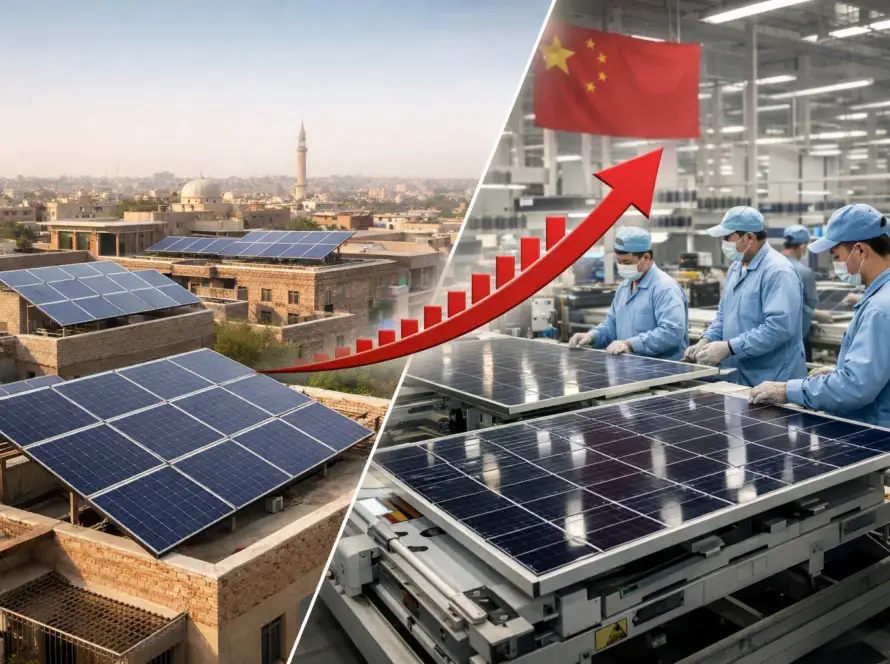
Yes, solar is still worth it in Pakistan after net billing, but the return on investment is slower than before. While export rates are lower, rising electricity tariffs, smart system sizing, and self-consumption still make solar a financially viable long-term investment for homes and businesses.
This analysis is based on the latest Net Billing update in Pakistan.
Key Takeaways
- Solar remains profitable in Pakistan despite the shift to net billing
- Net billing reduces export income but does not eliminate savings
- Self-consumption plays a key role in maximizing returns
- Payback periods are longer compared to net metering
- Solar ROI still beats rising grid electricity costs
- Proper system sizing determines overall profitability
Understanding Net Billing Solar in Pakistan
What Is Net Billing?
Net billing allows solar users to sell excess electricity back to the grid at a lower, predefined rate, unlike net metering where exported units were adjusted at full tariff value.
How Net Billing Changed Solar Economics
With net billing solar Pakistan, exported units earn less, meaning:
- Savings depend more on daytime usage
- Oversized systems reduce profitability
- Consumption behavior matters more than before
Why Net Billing Was Introduced
The government introduced net billing to:
- Reduce pressure on the national grid
- Control subsidy losses
- Promote realistic solar system sizing
🔔 Alert Box
Installing a larger system than your actual consumption can significantly reduce ROI under net billing.
Is Solar Still Worth It in Pakistan in 2026?
Rising Electricity Prices
Even with net billing:
- Electricity tariffs continue to rise yearly
- Grid dependency is becoming expensive
- Solar offsets long-term price uncertainty
Shift Toward Self-Consumption
Solar remains attractive when:
- Most energy is used during daylight
- Appliances are optimized for daytime use
- Smart inverters and load management are applied
Residential vs Commercial Viability
Commercial users benefit more because:
- Offices operate during the day
- Export reliance is minimal
- Solar directly replaces grid usage
Solar Net Billing vs Net Metering Pakistan
Understanding the difference between net billing vs net metering Pakistan is essential before investing in solar.
| Factor | Net Metering | Net Billing |
|---|---|---|
| Export Rate | Full tariff | Lower fixed rate |
| Payback Period | Faster | Slower |
| System Sizing | Flexible | Needs optimization |
| Profitability | Higher | Moderate but stable |
Solar net billing vs net metering Pakistan shows that while net metering was more lucrative, net billing still delivers consistent long-term savings.
Solar ROI in Pakistan After Net Billing
A well-designed system significantly improves solar ROI in Pakistan under net billing.
What Determines ROI Now?
Solar ROI in Pakistan depends on:
- Electricity tariff slab
- Daily usage pattern
- System size
- Installation quality
Typical ROI Range
- Residential: 4.5–6.5 years
- Commercial: 3–5 years
Long-Term Financial Impact
Even after ROI:
- Electricity bills drop drastically
- Systems last 20–25 years
- Savings compound over time
✅ Success Box
Homes that shift 60–70% of usage to daytime recover costs faster even under net billing.
Solar System Payback Period in Pakistan
Average Payback Period
The solar system payback period Pakistan typically ranges between:
- 4–7 years for homes
- 3–5 years for businesses
Factors That Increase Payback Speed
- Accurate system sizing
- High daytime load
- Quality panels and inverters
Factors That Delay Payback
- Oversized systems
- Low self-consumption
- Poor installation planning
Is Solar Investment in Pakistan 2026 a Smart Decision?
Financial Perspective
Despite net billing:
- Solar still beats long-term grid costs
- Protects against tariff inflation
- Offers predictable energy expenses
Energy Security Perspective
- Reduces power outages impact
- Less reliance on unstable grid supply
- Improves energy independence
Environmental Value
- Reduces carbon footprint
- Supports clean energy transition
Why Choose AYME Solar for Net Billing Systems
If you’re evaluating whether solar is worth it in Pakistan after net billing, choosing the right installer matters more than ever.
AYME Solar (aymesolar.com) specializes in:
- Net billing–optimized system design
- Accurate load assessment
- ROI-focused installations
- Residential and commercial solar solutions
Their approach ensures:
- No oversizing
- Maximum self-consumption
- Faster payback under net billing
Want a Net Billing–Optimized Solar System?
Under net billing, the right system size and daytime usage plan decide your ROI. Get an expert assessment and a solar setup designed for maximum self-consumption and faster payback.
Get a Solar AssessmentTrusted solar solutions for homes & businesses in Pakistan • Designed for net billing savings
Final Thoughts
Solar is no longer a “quick profit” decision under net billing, but it remains a smart long-term investment. With correct planning, realistic expectations, and professional installation, solar continues to deliver financial stability and energy independence in Pakistan.
FAQs – Solar Worth It in Pakistan After Net Billing
Yes, solar is still worth it for homes, especially if most electricity is used during daytime. Although export rates are lower, rising electricity prices ensure long-term savings and energy security.
Net billing reduces export earnings, which slows ROI slightly. However, users who consume most of their solar power during the day still achieve solid returns within 5–7 years.
The average solar system payback period in Pakistan ranges from 4 to 7 years for residential users and 3 to 5 years for commercial installations.
Yes, commercial users benefit more because their daytime operations align with solar production, minimizing reliance on exporting electricity at lower net billing rates.
Net metering was more profitable, but net billing is now the standard. While returns are slower, net billing still provides long-term savings when systems are properly sized.
Yes, solar investment in Pakistan in 2026 remains safe due to rising grid tariffs, long system lifespan, and reduced dependency on expensive electricity.
Absolutely. Oversized systems reduce profitability. Accurate system sizing based on actual consumption is critical for achieving strong ROI under net billing.